What Is Sustainable Stormwater Management — and Why Should Commercial Properties Care?
Sustainability has become one of the most talked-about topics in commercial property management. You hear it from tenants, from ownership groups, from municipal regulators, and increasingly from the contractors and vendors you work with.
In the stormwater world, it's no different. Sustainable stormwater management is moving from a niche concept to an operational expectation — and commercial and industrial property managers across South Carolina and North Carolina are starting to ask what it actually means for their properties.
The good news: if you're already maintaining your stormwater system properly, you're already practicing sustainable stormwater management. The better news: there's more you can do — and it pays off in both compliance and long-term property value.
Here's what you need to know.
What Does "Sustainable Stormwater Management" Actually Mean?
Sustainable stormwater management refers to managing stormwater runoff in a way that works with natural processes rather than against them — reducing pollution, protecting water quality, minimizing erosion, and preserving the function of local waterways and ecosystems.
Traditional stormwater management was built around one goal: move water off the property as fast as possible. Pipes, curbs, gutters, and detention ponds were designed to collect runoff and discharge it downstream quickly. It worked — until it didn't. Downstream flooding, erosion, sediment in waterways, and water quality degradation are the long-term results of an infrastructure approach that prioritized speed over balance.
Sustainable stormwater management takes a different approach. Instead of just moving water fast, it focuses on:
- Slowing runoff down — giving water time to infiltrate into the soil and reduce peak flow volumes
- Filtering pollutants — using vegetation, soil, and engineered BMPs to clean runoff before it reaches waterways
- Reducing erosion — protecting disturbed soils and stabilizing slopes so sediment stays where it belongs
- Maintaining natural hydrology — preserving the water balance of a site as close to pre-development conditions as possible
For commercial property owners and managers, this translates into a very practical set of actions — most of which you're already required to take under your stormwater permit.
Why Is Sustainability Becoming a Priority for Commercial Properties?
Sustainable stormwater management isn't just an environmental philosophy — it's becoming a business requirement. Here's why commercial properties across SC and NC are paying more attention to it now:
Regulatory pressure is increasing.
Stormwater regulations in South Carolina and North Carolina have been tightening steadily over the past decade. SCDHEC and municipal MS4 programs are adding inspection requirements, tightening discharge standards, and increasing enforcement activity. Properties that treat sustainability as a compliance strategy — not just a buzzword — are better positioned to stay ahead of regulatory changes before they become costly mandates.
Tenants and ownership groups are asking about it.
ESG (Environmental, Social, and Governance) reporting is now standard for many institutional property owners, REITs, and large commercial tenants. If you manage properties for institutional owners or lease to corporate tenants, expect questions about environmental management practices — including stormwater — to become more common in the next few years.
It reduces long-term costs.
Properties that manage stormwater sustainably have fewer expensive repair events. Well-maintained vegetation controls erosion. Properly functioning BMPs prevent sediment buildup. Stable slopes don't fail after heavy rains. The upfront investment in sustainable maintenance practices pays back in avoided repair costs over the life of the property.
It protects downstream neighbors.
Commercial properties that discharge poorly managed stormwater create problems for downstream landowners, municipalities, and waterways. As awareness of these impacts grows, so does the regulatory and legal exposure for properties that aren't managing their systems responsibly.
What Sustainable Stormwater Management Looks Like in Practice
For most commercial and industrial properties, sustainable stormwater management isn't a radical overhaul — it's a disciplined, consistent approach to maintaining the systems you already have. Here's what it looks like on the ground:
Proper BMP Maintenance
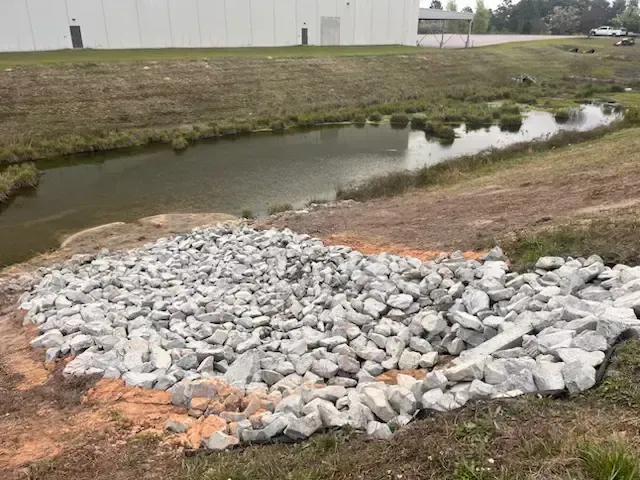
Your retention pond, detention basin, or bioretention area is a stormwater BMP — and a functioning one is the foundation of sustainable stormwater management on your property. Regular maintenance keeps it filtering, infiltrating, and managing runoff the way it was designed to. A neglected BMP doesn't just create compliance issues — it becomes a source of pollution rather than a filter for it.
Vegetation Management That Works With Nature
The right vegetation on pond banks, slopes, and drainage channels does more than look good. It stabilizes soil, filters runoff, provides habitat, and reduces erosion. Sustainable stormwater maintenance means managing vegetation intentionally — controlling invasive species, preserving native plantings, and using vegetation as an active tool for stormwater management rather than just cutting everything back on a schedule.
Responsible Land Clearing
When overgrown land needs to be cleared, the method matters. Forestry mulching is the most sustainable approach available for commercial land clearing — it grinds vegetation in place, eliminates burning and hauling, protects the soil layer, and leaves a mulch cover that controls erosion immediately after clearing. Traditional clearing methods that leave bare soil exposed are one of the leading causes of accelerated erosion and sediment loading into stormwater systems.
Documented Inspection Programs
Sustainability isn't just about what you do — it's about being able to prove it. A documented stormwater inspection program creates the paper trail that demonstrates your property is being managed responsibly. It also catches emerging issues early, before they become the kind of repair events that undo years of careful maintenance.
Erosion Control as a Priority
Erosion is one of the most environmentally damaging and most preventable stormwater problems on commercial properties. Sustainable management treats erosion control as a proactive priority — not something addressed after the slope has failed or the sediment has reached the pond.
Sustainability Is a Direction, Not a Destination
Sustainable stormwater management doesn't require a complete overhaul of how your property operates. For most commercial and industrial properties, it starts with doing the basics well — maintaining your BMPs, managing vegetation responsibly, clearing land sustainably, and keeping documented records of all of it.
The properties that will be best positioned as regulatory standards tighten and sustainability expectations grow aren't the ones that are building new green infrastructure from scratch. They're the ones that have been quietly doing the work — inspecting regularly, maintaining proactively, and managing their stormwater systems the right way.
At Carolina Outdoor Services, that's what we've been doing for 20 years across South Carolina and North Carolina. If you want to make sure your property is on the right track, let's start with a conversation.
📞 (803) 518-2787 · Mon–Fri, 7AM–5PM
Schedule Your Free Site Assessment
Serving commercial and industrial properties throughout SC & NC, including Lexington, Columbia, Aiken, Greenville, Spartanburg, and beyond.
Carolina Outdoor Services LLC | cosstormwater.com | Gilbert, SC
Custom HTML/CSS/JAVASCRIPT