Fall Stormwater Inspections in South Carolina: Why Q4 Is the Right Time to Get on the Books
Most commercial property managers think of stormwater inspections as a spring task. Makes sense on the surface — spring rains are heavy, regulatory inspection season picks up, and things look worse after winter. But here's what 20 years of working with commercial and industrial properties across South Carolina has taught us: the property managers who show up to spring in the best shape are the ones who did their work in the fall.
Getting a professional stormwater inspection on the calendar before the end of the year isn't just smart planning. For a lot of properties in SC and NC, it's the move that keeps you off the violation list when it matters most.
Here's why Q4 is one of the best inspection windows of the year — and what it actually covers.
What a Q4 Inspection Tells You That a Spring Inspection Can't
Fall gives you a clear picture of what your stormwater system has been through.
South Carolina summers are hard on stormwater infrastructure. Heavy afternoon storms, sustained heat, and aggressive growing seasons combine to stress retention pond banks, fill inlet structures with debris, push sediment into basins, and give invasive species months to establish themselves on slopes and berms. By the time fall arrives, you've accumulated a full season of wear.
A fall inspection documents what summer left behind — before winter compounds any of it.
What commonly turns up in fall inspections:
Sediment accumulation from summer storm events
Eroded channels or soft spots on pond banks from concentrated runoff
Invasive vegetation that grew aggressively over the summer and is now established on slopes
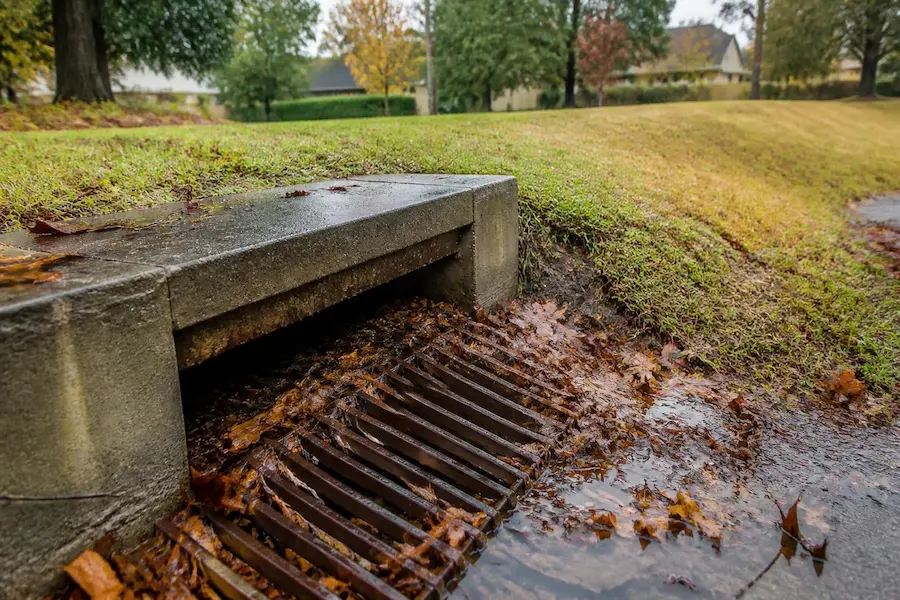
Outlet structure debris from storm debris accumulation
Early-stage berm issues that are much easier and cheaper to address before they deteriorate further through the winter wet season
The advantage: you find it in October or November, you fix it on your terms and timeline. You find it in April when a regulatory inspector shows up — you're fixing it under a compliance deadline.
The Documentation Piece Most Property Managers Overlook
Here's a compliance question worth sitting with: if a regulatory inspector asked you for your stormwater inspection records right now, what would you hand them?
Most governing authorities in South Carolina require stormwater BMP inspections between one and four times per year, depending on your municipality, permit type, and system classification. And when they conduct their own inspection and ask for your maintenance records, what they're looking for is documentation — a dated written report showing that your system has been professionally reviewed and that any identified issues have been addressed or are being addressed.
No documentation = compliance violation. Even if your pond is in perfect condition.
A Q4 inspection gives you a current, dated inspection report on file before the new year. Going into 2027 with documented maintenance history is exactly where you want to be.
What Our Stormwater Inspection Covers
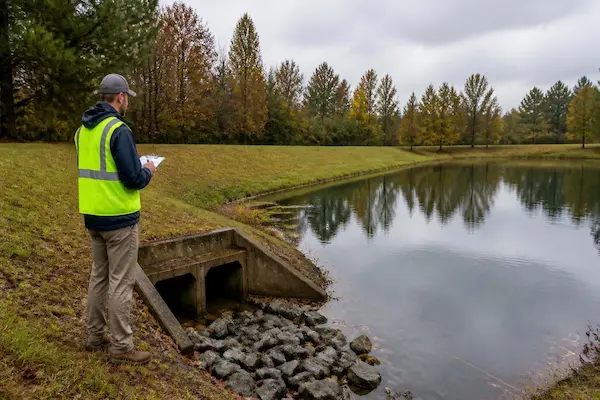
When Carolina Outdoor Services conducts a stormwater inspection, we go through your system the same way a regulatory inspector would — outlet to inlet, surface to structure, slope to berm. Every component gets reviewed. Every finding gets documented.
Here's what's included:
🔍 Retention and detention pond assessment— Basin condition, forebay health, berm integrity, sediment accumulation levels, and water quality visual assessment
🔍 Outlet and inlet structure inspection— Riser pipes, weirs, trash racks, and control devices. Blockages, structural issues, and drainage function
🔍 Pond banks and slopes— Erosion indicators, bare soil, rilling, berm soft spots, and early-stage failures before they become structural problems
🔍 Drainage ditches and conveyances— Vegetation encroachment, debris blockages, and flow capacity
🔍 Catch basins and inlets— Sediment accumulation, structural condition, drainage function
🔍 Vegetation compliance— Bank and slope vegetation health, invasive species presence, and compliance with typical maintenance requirements
What you receive after every inspection:
Full written inspection report with current conditions on every component
Photo documentation of findings and flagged issues
Plain-language compliance status summary
Prioritized maintenance recommendations — what needs attention now vs. what can be monitored
Why Fall Inspections Set You Up for Spring
Spring in the Carolinas means regulatory inspection season, heavy rain events, and the start of the growing season — all at once. Properties that go into spring without a current inspection on file, or with known issues that weren't addressed over winter, are playing catch-up from the start.
Properties that had a fall inspection — and addressed what was found — go into spring in a fundamentally different position:
✅ Current documentation on file before regulatory season starts
✅ Known issues repaired before winter wet season makes them worse
✅ Vegetation managed before spring growth begins
✅ No scrambling to schedule repairs under a regulatory deadline
It's the difference between managing your property and reacting to it.
What Happens If You Skip the Fall Window
Winter in South Carolina is mild compared to most of the country — but your stormwater system still takes hits. Heavy rain events move sediment. Freeze-thaw cycles, even modest ones, stress berms and slopes. And any issues that were small in October can look considerably worse by the time spring inspection season arrives.
More practically: repair contractors, inspection services, and clearing crews are all busier in spring. If you're calling about a compliance issue in March with a regulatory deadline attached, you're competing for scheduling with everyone else in the same situation.
Fall and early winter is the window where you control the timing, the pace, and the cost.
Schedule Your Fall Stormwater Inspection
Carolina Outdoor Services serves commercial and industrial properties throughout South Carolina and North Carolina. Our inspections are thorough, documented, and built around what your specific system needs — not a generic checklist.
If your stormwater system hasn't been professionally inspected in the last six months, or if you're heading into the new year without current documentation on file, Q4 is the time to change that.
Call us at (803) 518-2787 or request your inspection online. We'll get you scheduled before the year closes out.