Forestry Mulching for Retention Pond Banks: The Overlooked Maintenance Problem That Shows Up at Inspection
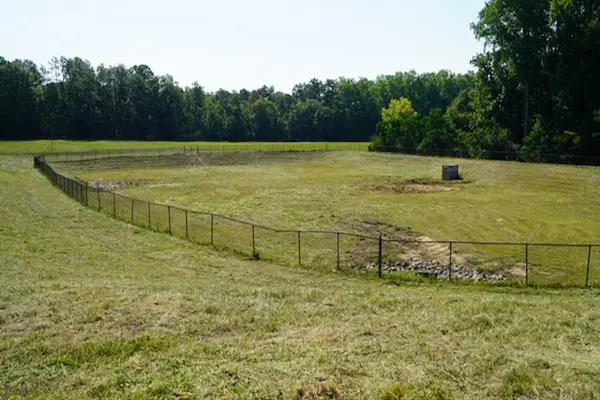
Most commercial property managers think about retention pond maintenance in terms of what's in the pond — sediment levels, water clarity, outlet structure function. That's important. But one of the most common compliance violations that shows up during stormwater inspections has nothing to do with the water. It's on the banks.
Overgrown, unmanaged vegetation on retention pond banks is one of the top findings in regulatory stormwater inspections across South Carolina. And for properties that have been neglecting those banks for a season or two — or that have had invasive species quietly spreading along the shoreline — the fix isn't a mowing crew. It's forestry mulching.

Here's what's actually happening on neglected pond banks, why it matters for compliance, and why fall is the best window to address it before inspections pick up in the spring.
What "Overgrown Pond Banks" Actually Means — And Why It's a Compliance Issue
A retention pond functions as a stormwater Best Management Practice (BMP). Regulatory agencies — SCDHEC, municipal stormwater programs, and local governing authorities — require that BMPs be maintained according to specific standards. Those standards include requirements for the vegetative condition of banks, berms, and slopes.
When inspectors see any of the following on a pond bank, they flag it:
Woody vegetation established on berms or slopes. Trees and large shrubs on pond banks are not just an aesthetic issue — root systems from woody vegetation compromise berm integrity over time. As roots grow and die, they create channels that allow water to move through the berm structure, accelerating erosion and, in severe cases, creating seepage or failure risk.
Invasive species encroachment. Privet, Chinese tallow, kudzu, and phragmites are particularly aggressive in the SC lowland and transition zone environments where most commercial retention ponds sit. Inspectors know what these look like, and their presence indicates deferred maintenance.
Loss of proper ground cover. Banks that should have a stable grass cover — protecting against erosion — but instead have patchy, bare, or heavily shaded areas from overgrown vegetation represent a compliance vulnerability.
Blocked or restricted access to outlet structures. When vegetation overgrowth prevents proper inspection or maintenance access to inlet pipes, outlet structures, or riser assemblies, that's a separate compliance finding — and a practical problem when something actually needs servicing.
Why a Mowing Crew Isn't the Right Answer for Established Overgrowth
Light vegetation management — routine mowing of grass banks, trimming around structures — is part of a normal retention pond maintenance program. But when vegetation has been left unmanaged for multiple seasons, or when woody invasive species have established themselves on slopes and banks, a mowing crew with standard equipment can't solve the problem.
Trying to mow through established privet thickets, small trees, or dense brush with standard mowing equipment doesn't actually clear the site — it cuts the tops and leaves the root systems intact. Those root systems resprout aggressively, and within a season, the property is back where it started. In some cases, cutting invasive species without proper management actually triggers a more aggressive regrowth response.
Forestry mulching handles the problem differently.
The specialized rotary cutting equipment used in forestry mulching grinds trees, brush, stumps, and dense vegetation right at ground level — processing everything in a single pass. The result is a clean bank, clear of woody material, with a layer of mulch that settles over the root crowns and reduces immediate regrowth pressure. For properties preparing for a spring stormwater inspection, this is the result that matters.
What the Process Looks Like for a Retention Pond Bank Project
Step 1 — Site assessment. We walk the site with you, identify the extent of overgrowth, assess berm condition, and determine the appropriate clearing approach. Some banks need full mulching passes; others need targeted clearing around structures with careful attention to berm integrity.
Step 2 — Clearing and mulching. Our equipment works along the bank and slope, processing vegetation in place. We take care around outlet structures, riprap areas, and any features that need to remain intact. Debris stays on site as mulch — no burn piles, no haul-off.
Step 3 — Post-clearing assessment. Once vegetation is cleared, we can see the actual condition of the bank — erosion patterns, bare spots, areas where new grass establishment will be needed. If there's remediation work required after clearing, we identify it while we're on site.
Step 4 — Vegetation establishment (if needed). For banks where clearing reveals significant bare or eroded areas, we can recommend and coordinate appropriate grass establishment to ensure the bank has proper ground cover in place before spring inspection season.
Why Fall Is the Right Time to Address Pond Bank Overgrowth
Stormwater regulatory inspections in South Carolina tend to pick up in spring — after winter dormancy, when growing season conditions make vegetation issues fully visible and when regulatory agencies cycle through their annual inspection schedules.
Addressing overgrown pond banks in fall accomplishes two things:
It gives you a full winter for the site to stabilize. Mulched material breaks down and settles. Any new grass establishment has time to root before spring inspection season. The bank looks right when the inspector shows up — not rushed.
It puts you in front of the scheduling curve. Forestry mulching work in SC and NC peaks between November and March. Properties that reach out in September and October get their project on the calendar. Properties that wait until December are competing for slots with everyone else who waited.
Schedule Your Pond Bank Assessment Before Fall Gets Away
If you have retention pond banks that haven't been properly managed in the past season or two — or if you already know there are invasive species or woody vegetation issues on your slopes — now is the time to have a conversation.
Carolina Outdoor Services has been maintaining commercial and industrial stormwater systems across SC and NC for over 20 years. We know what inspectors look for, we know what healthy pond banks look like, and we have the equipment to get overgrown sites where they need to be.
Call us at (803) 518-2787 or request a free site assessment. September scheduling fills faster than most property managers expect — and showing up to a spring inspection ready beats showing up with a work order that's two weeks old.