How Retention Pond Maintenance Supports Water Quality — and Keeps You on the Right Side of Environmental Compliance
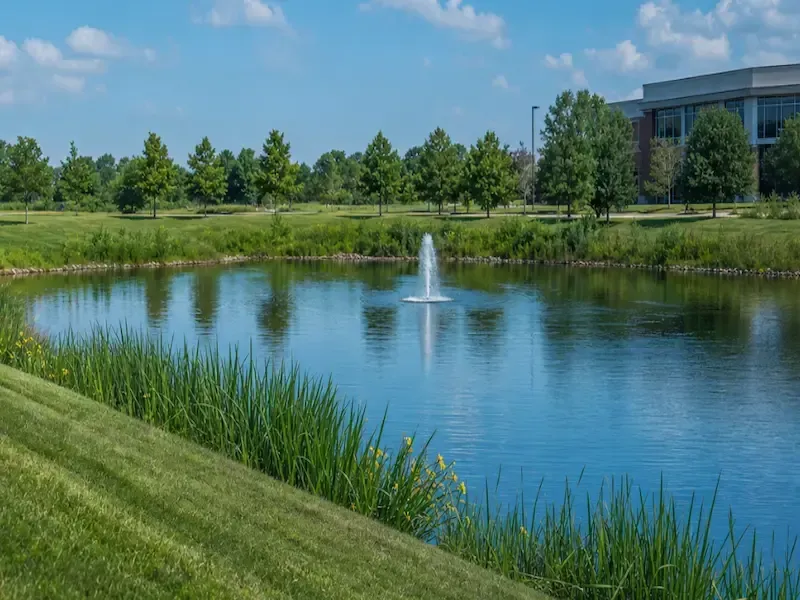
Most property owners think about retention ponds in one of two ways: either as a drainage solution that handles stormwater runoff, or as a landscape feature that adds visual character to a development. Both are true — but neither captures the full picture.
A well-maintained retention pond is also an active water quality system. It filters pollutants, settles sediment, and reduces the concentration of nutrients and contaminants before stormwater reaches local waterways. When it's maintained properly, it works the way it was designed to. When it's not, it fails at all three jobs simultaneously — and the environmental and regulatory consequences follow.
Here's how routine pond maintenance directly supports water quality, and why that matters for South Carolina property owners beyond just keeping things looking good.
How Retention Ponds Filter Water (And Why Maintenance Keeps That Working)
Retention ponds aren't passive containers. They're engineered to give runoff water time and space to settle and filter before it's released downstream. The process works in several layers:
Sediment Settling
As stormwater flows into a retention pond, its velocity drops. Heavier particles — sediment, debris, particulate matter — sink to the bottom. Over time, this is exactly what causes sediment accumulation, which is why monitoring and occasional dredging are part of responsible maintenance. But in the short term, this settling process is the pond doing its job.
Nutrient Uptake by Aquatic Vegetation
Shoreline and aquatic plants absorb nitrogen and phosphorus from the water — the same nutrients that fuel algae blooms in ponds and contribute to downstream water quality problems. This is one reason why removing all vegetation from a pond shoreline is actually counterproductive. The goal of vegetation management isn't elimination — it's balance. Maintaining the right mix of plants keeps nutrient uptake working while preventing overgrowth from clogging drainage structures.
Pollutant Filtration
Stormwater runoff picks up motor oil, heavy metals, fertilizers, and other pollutants as it moves across paved surfaces, lawns, and parking lots. Retention ponds provide a buffer between that contaminated runoff and the streams, rivers, and groundwater systems it would otherwise reach directly. A functioning pond with healthy sediment and vegetation layers filters a meaningful portion of those pollutants before release.
When sediment builds past capacity, when vegetation becomes invasive and chokes the system, or when inlets and outlets fail — the filtration process breaks down. The pond stops being a water quality asset and starts being a liability.
Environmental Compliance in South Carolina — What Property Owners Need to Know
South Carolina's stormwater management requirements fall primarily under the oversight of DHEC — the Department of Health and Environmental Control — along with local municipal separate storm sewer system (MS4) programs in cities like Columbia and Greenville.
If your property has a permitted stormwater retention facility, you have maintenance obligations whether you're actively aware of them or not.
What DHEC Looks For
DHEC inspectors and local stormwater program coordinators look for evidence that a retention facility is being actively maintained and performing its intended function. That includes:
Clear, functional inlets and outlets free of debris and blockage
Stable shorelines without significant erosion or bank failure
Adequate storage capacity (no excessive sediment accumulation)
No discharge of untreated runoff in violation of permit conditions
Absence of invasive vegetation that compromises drainage performance
What Happens When You're Out of Compliance
Notices of violation from DHEC or local stormwater programs aren't just paperwork. They come with timelines for corrective action, and failure to comply can result in civil penalties. More practically, they require reactive remediation work — which is almost always more expensive and disruptive than the preventive maintenance that would have avoided the issue.
Documentation Matters
One of the most underappreciated aspects of compliance is documentation. Regulatory programs want evidence of maintenance activity — not just a verbal assurance that the pond looks fine. Keeping records of maintenance visits, inspection findings, and corrective actions taken creates a paper trail that protects property owners during inspections and demonstrates good-faith stewardship of the facility.
Carolina Outdoor Services provides written notes after every maintenance visit — exactly for this reason.
The Connection Between Pond Health and Local Waterways
The Midlands region of South Carolina sits within the Congaree River watershed. Stormwater from Columbia-area properties — including what flows through retention ponds — ultimately connects to that system. The Congaree River feeds into Lake Marion and eventually reaches the Atlantic coast.
That chain of connection is why state and local stormwater regulations exist — and why water quality management at the property level isn't just a local issue. It's part of a broader ecosystem responsibility.
Healthy, well-maintained retention ponds do their part in that system. They reduce pollutant loads, moderate peak flow rates during storm events, and support the biological processes that keep water moving through the watershed in better condition than it arrived.
Neglected ponds do the opposite. They contribute sediment, nutrients, and pollutants downstream — and when enough of them fail, the cumulative effect shows up in stream assessments, lake water quality reports, and regulatory enforcement priorities.
Maintenance as Environmental Stewardship
For commercial developers, HOA boards, and property managers across the Columbia area, thinking about pond maintenance through the lens of environmental stewardship — rather than just compliance avoidance — changes the decision-making calculus.
It's not about avoiding a fine. It's about maintaining infrastructure that serves the property, the community around it, and the watershed it connects to. Done right, retention pond maintenance is one of the most straightforward environmental contributions a property can make.
Carolina Outdoor Services approaches every maintenance engagement with that standard in mind. We're not doing the minimum to pass an inspection — we're maintaining the system to perform the way it's supposed to.
Ready to Get Ahead of It?
Whether you're facing a compliance concern, dealing with visible pond deterioration, or simply want to know where your stormwater system stands — we'll come out and give you an honest assessment.
Schedule a Free Site Assessment →
Carolina Outdoor Services provides retention pond maintenance, stormwater management, and drainage solutions for commercial properties, HOA communities, and landowners throughout Columbia, SC and the Midlands region. Learn more about our stormwater management services or stormwater inspection services.